Updated September 8, 2026. This practical guide is informed by current public guidance and the day-to-day questions The Hearing Guy team helps patients work through in Asheville and Hendersonville. It provides general education and does not replace instructions for your exact device or individualized clinical care.
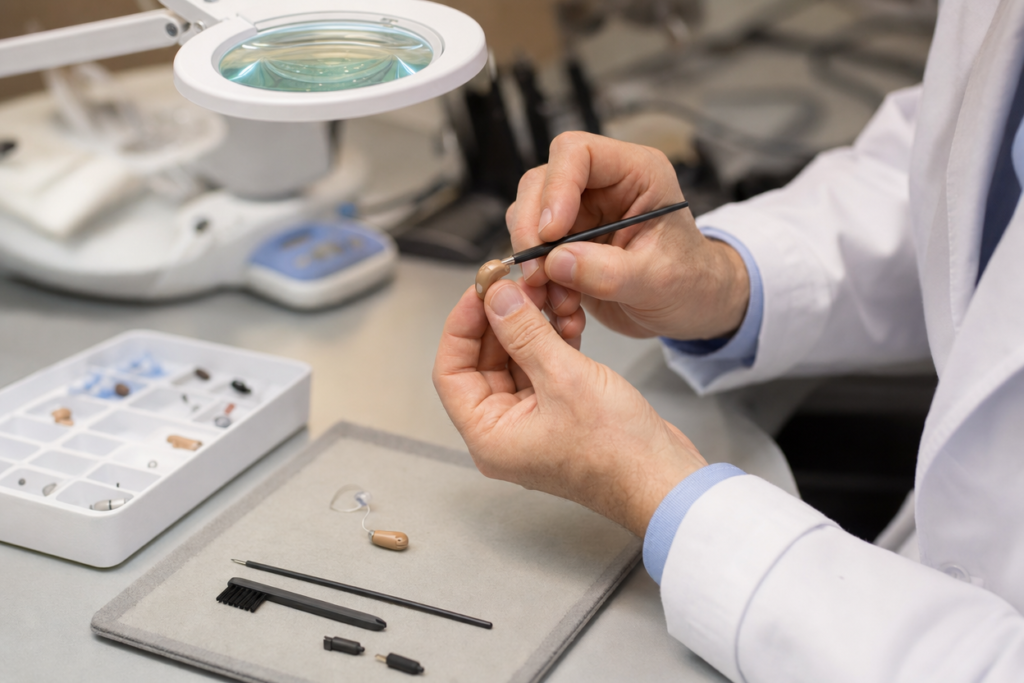
To clean hearing aids safely, use clean dry hands, wipe the exterior with the approved material, brush debris away from openings, and replace only the filters or parts you were shown how to change. Keep water, alcohol, solvents, sharp objects, and high heat away from the device.
Before you begin
- Work over a clean, dry, well lit surface.
- Identify the exact hearing aid model.
- Use the manufacturer instructions and the tools supplied for that model.
- Keep replacement parts organized by device.
- Stop if a component does not move easily.
A conservative cleaning routine
- Wash and dry your hands.
- Inspect the hearing aid for cracks, moisture, or loose parts.
- Wipe the outer surface gently.
- Hold openings downward while brushing debris away so it does not fall farther inside.
- Check the wax guard, dome, earmold, tubing, and charging contacts only as applicable.
- Replace approved user serviceable parts according to instructions.
- Store or charge the devices as directed.
Cleaning methods that can cause damage
| Avoid | Reason |
|---|---|
| Water, alcohol, or household cleaner | Liquid and solvents can damage electronics and finishes. |
| Pins, needles, or toothpicks | Sharp objects can push debris inward or damage openings. |
| Hair dryer or direct heat | Heat can damage electronics, batteries, and shells. |
| Glue or forced parts | Home repair can make professional service harder. |
When cleaning is not the answer
Arrange inspection when sound remains weak, distorted, intermittent, or unbalanced after basic approved care. The same applies to a cracked shell, damaged receiver wire, unreliable charging, repeated feedback, or suspected moisture exposure.
When the ear needs attention
Hearing aid debris and earwax are not the same problem. Pain, drainage, sudden hearing change, dizziness, or an object in the ear needs appropriate clinical attention. Do not insert a cleaning tool into the ear canal.
Frequently asked questions
Can I use an alcohol wipe?
The FDA advises avoiding solvents and alcohol on hearing aids. Follow the exact manufacturer instructions.
How often should I clean hearing aids?
A gentle daily inspection and model specific routine can help. The schedule may differ based on device style, wax, moisture, and daily use.
Do hearing aid cleaning kits fit every model?
No. A kit may contain tools or replacement parts that are inappropriate for a particular device.
Use the quick troubleshooting guide if sound still seems off, or see the hearing aid repair service page.
Bring the question to real life
Bring both hearing aids, the charger, and the cleaning tools you use. A brief demonstration can prevent accidental damage and make the routine easier.
Contact The Hearing Guy to schedule a conversation in Asheville or Hendersonville.