
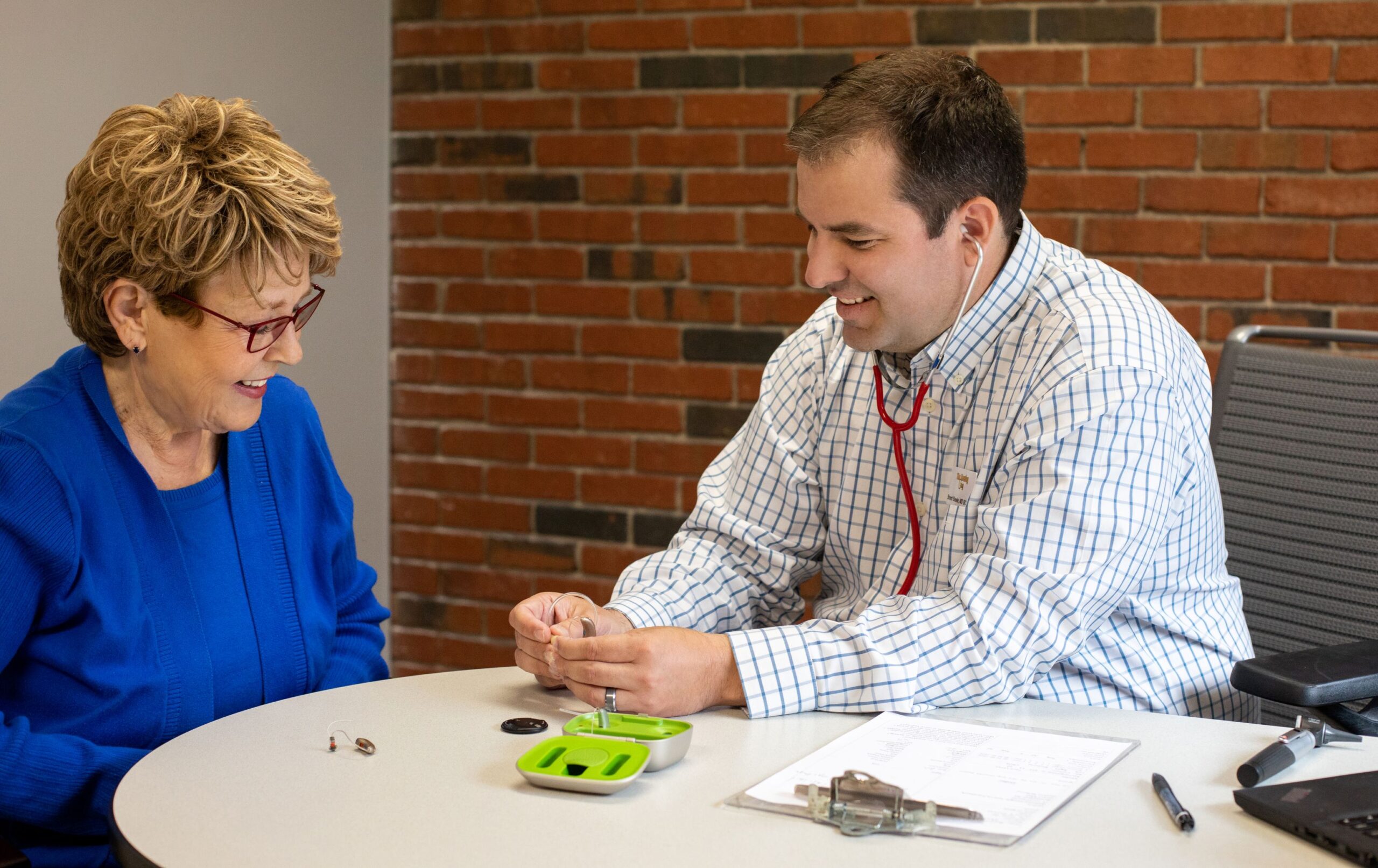
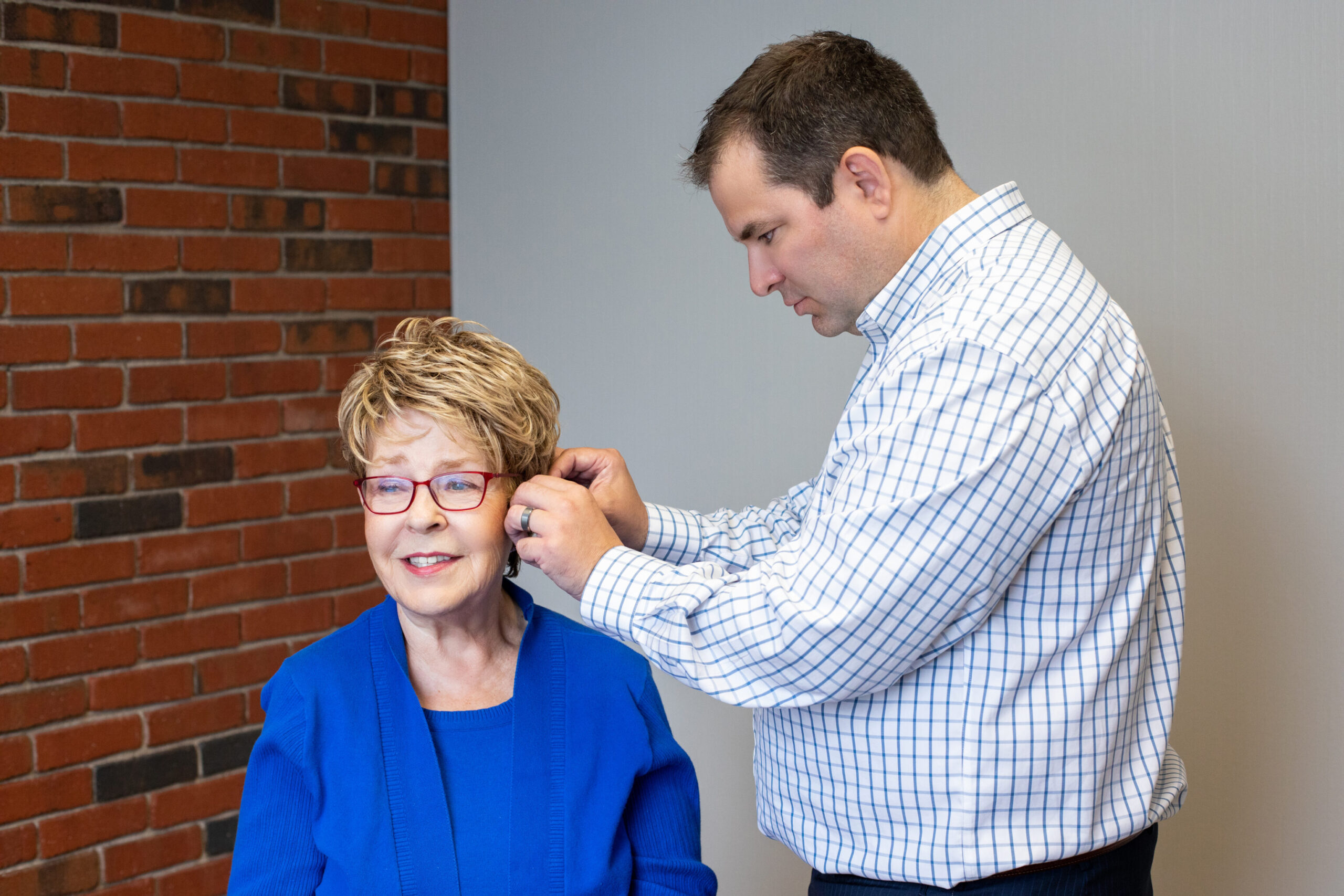
At The Hearing Guy, you’re in expert hands with our team of hearing instrument specialists. After completing your hearing test, we’ll collaborate to find the ideal solution for your unique hearing needs. Because every case of hearing loss is different, we’ll customize your hearing aids to match your specific level of loss and preferences. The fitting and programming appointment allows us to ensure the accuracy of your initial test results. Once your hearing aid settings are finalized, you’ll experience a whole new world of sound.
Fitting a hearing aid is a precise process that begins with carefully placing the device in or around the ear. Our team ensures that the hearing aid sits comfortably and securely, adjusting its position as needed to optimize sound reception. We pay close attention to factors like ear canal size and shape to ensure a snug fit without discomfort. Once the hearing aid is in place, we conduct thorough tests to verify its functionality and make any necessary adjustments to guarantee optimal performance. Our goal is to ensure that your hearing aid fits seamlessly into your daily life, providing clear, natural sound without any distractions.
These terms describe different parts of hearing care. The following is general guidance, not a description of a particular test performed at every appointment.
If you are still choosing a device, start with a hearing aid evaluation. Our hearing aid technology guide can help you prepare questions about listening needs, controls and power options.
During the programming phase of the hearing aid process, our specialists fine-tune the device to meet your unique hearing needs. Using advanced software, we adjust settings like volume, frequency response and sound processing to optimize your listening experience. We take into account factors like your hearing test results, lifestyle and preferences to tailor the programming to your individual requirements. Throughout this process, we encourage open communication to ensure that the adjustments made align with your comfort and satisfaction.
During a hearing aid fitting and programming appointment, you’ll receive comprehensive instruction on various aspects of using and caring for your new device. Our specialists will demonstrate how to properly insert and remove the hearing aids, ensuring a comfortable and secure fit each time. We’ll guide you through the operation of the device, including adjusting volume and switching between different listening programs if applicable. Additionally, we’ll provide step-by-step guidance on how to clean and maintain your hearing aids to ensure optimal performance and longevity.
Bring the phone you use every day and a list of any television or remote microphone accessories you want to connect. Compatibility depends on the exact hearing aid and phone models, operating system, app, firmware and accessory. Bluetooth support alone does not guarantee direct audio streaming or hands-free calls. App control, call audio and media streaming are separate functions worth checking.
Before buying an accessory, confirm what your particular devices support and whether an additional adapter is needed. See our phone compatibility and accessories guide for questions to bring to your appointment.
A follow-up visit after getting hearing aids is crucial for ensuring that your adjustment to wearing them is smooth and successful. During this appointment, our specialists will assess your progress and address any concerns or challenges you may be experiencing. We’ll fine-tune the settings of your hearing aids based on your feedback and experiences since the initial fitting, optimizing their performance to better meet your needs. Additionally, we’ll provide further guidance on how to adapt to wearing hearing aids in different environments and situations. This follow-up visit offers valuable support and reassurance as you continue to acclimate to your new hearing aids, helping you achieve the best possible outcomes in your journey to better hearing.
A useful note describes the setting, what you were trying to hear and what was difficult. For example: conversation across a restaurant table, a passenger speaking in the car, television dialogue or a phone call. Note whether the issue affects one ear or both and which program or accessory you were using. These details are more useful than simply saying everything sounds too loud or too quiet.
Ask for individualized guidance about wearing time and adjustment. Do not assume that pain, persistent soreness or a sudden loss of device sound is something you must tolerate. Contact your hearing care professional about concerns; for a device fault, learn about hearing aid repair and troubleshooting.
For hearing aid fitting and programming in Asheville or Hendersonville, schedule a consultation with The Hearing Guy. Bring your questions about comfort, everyday listening and the devices you use most.