You sit in our office during your hearing aid fitting. Everything sounds clear. The audiologist adjusts the settings, and you’re impressed with how natural it feels. Then you get home, and something’s off. The TV sounds tinny. Your spouse’s voice is too loud. The kitchen sounds like a concert hall.
This is one of the most common complaints we hear from new hearing aid users—and it’s not a defect in the hearing aids. It’s the difference between a controlled environment and real life. Understanding why this happens, and what we do about it, is key to actually wearing your hearing aids long-term.
Why Our Office Sounds Different From Your Home
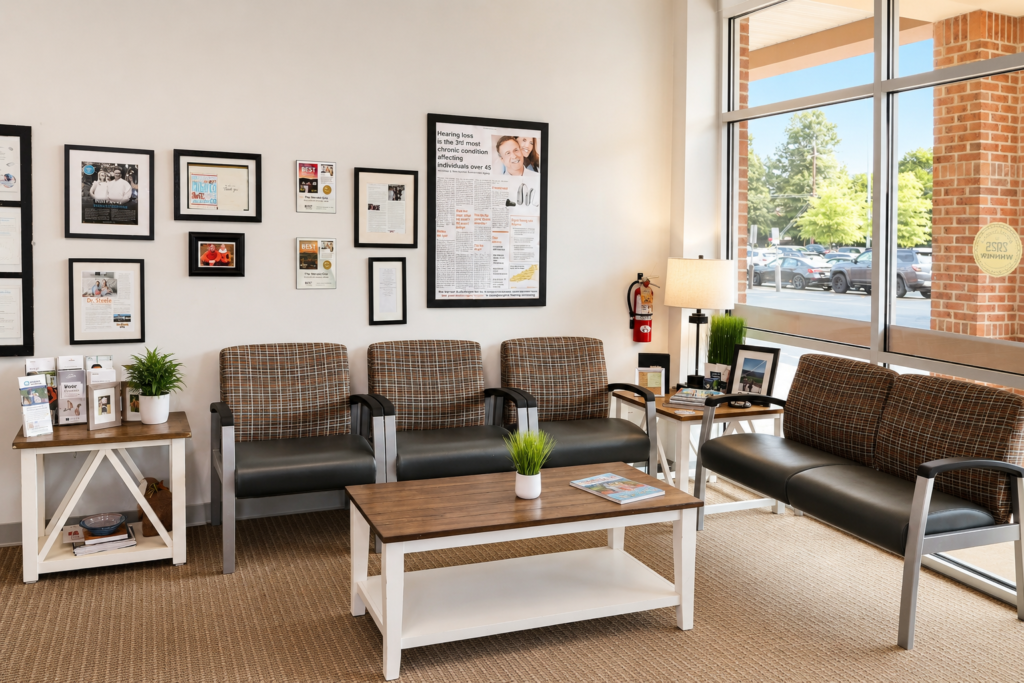
Our fitting room is designed to be quiet and controlled. It has acoustic treatment, minimal background noise, and a predictable sound environment. Your home, your car, and the restaurant where you have dinner are not like that.
When you first put on hearing aids in a quiet room, your brain is adjusting to amplification for the first time in years. Everything sounds loud because it IS loud compared to what you’ve been hearing. But in that controlled setting, there’s no competing noise, no echoes bouncing off hard surfaces, and no sudden changes in volume.
At home, you’re dealing with:
- Multiple sound sources at once — the TV, your spouse talking, the refrigerator humming, traffic outside
- Echoes and reflections — hard floors and walls bounce sound around, creating a chaotic acoustic environment
- Sudden volume changes — a door slams, the phone rings, a car passes by
- Familiar sounds you’ve been missing — you’re hearing things you haven’t heard in years, and your brain is relearning what they should sound like
This is why the hearing aids sound different. They’re working exactly as they should—they’re amplifying real-world sound, not the quiet office environment.
The Experience Hearing Approach: Real-World Programming
At The Hearing Guy, we don’t just fit hearing aids in a quiet room and send you home. We use what we call the “Experience Hearing” methodology, which means we program your hearing aids for the real world you actually live in.
This includes:
Multiple follow-up visits: We schedule three follow-up appointments in the first month. Each visit, we ask you detailed questions about how the hearing aids sound in different environments—at home, in the car, at restaurants, at work. We then reprogram the hearing aids based on your real-world feedback, not just what sounds good in our office.
Environment-specific programming: Modern hearing aids have multiple “programs” or settings. We program one for quiet environments, one for restaurants and noisy places, one for phone calls, and one for music or TV. You can switch between them, or the hearing aids can automatically detect which environment you’re in and adjust.
Gradual adjustment: We don’t turn the amplification all the way up on day one. We start conservatively and increase it over time as your brain adjusts. This prevents the overwhelming feeling of hearing everything at once.
Your lifestyle matters: If you spend most of your time at home, we program differently than if you’re in meetings all day. If you’re a musician, a golfer, or someone who spends time outdoors, those environments shape how we set up your hearing aids.
What to Expect in the First Month
The first month with hearing aids is an adjustment period. Here’s what’s normal:
- Week 1: Everything sounds loud and strange. Your own voice sounds different. This is normal. Your brain is relearning sound.
- Week 2-3: You start to adapt. Some sounds feel more natural. But you might notice certain environments are still uncomfortable—restaurants, for example, might feel overwhelming.
- Week 4+: Your brain continues to adjust. With each follow-up visit and reprogramming, the hearing aids feel more natural in more situations.
This is why follow-up visits are crucial. If you skip them, you’re missing the chance to fine-tune the hearing aids for your real life. Many people who abandon hearing aids do so because they didn’t get proper follow-up programming—not because the hearing aids don’t work.
The Role of Your Brain in Hearing Aid Success
Here’s something important: your hearing aids are only half the equation. The other half is your brain’s ability to adapt and learn.
When you’ve had untreated hearing loss for years, your brain has gotten used to not hearing certain sounds. When you suddenly start hearing them again, your brain needs time to relearn what they should sound like. This is called “auditory acclimatization,” and it takes weeks to months.
The more you wear your hearing aids, the faster this happens. People who wear their hearing aids all day, every day adapt much faster than people who wear them only occasionally. If you want your hearing aids to sound natural, commit to wearing them consistently.
Hearing Aid Fitting in Asheville and Hendersonville
If you’re considering hearing aids, or if you’ve tried them before and weren’t satisfied, the difference might be in the fitting process. At The Hearing Guy, we don’t just sell you hearing aids—we fit them to your life. That means multiple follow-up visits, real-world programming, and a commitment to getting it right.
Schedule your hearing evaluation today, and let’s talk about what real-world hearing aid fitting looks like.