
Updated September 8, 2026. This practical guide is informed by current public guidance and the day-to-day questions The Hearing Guy team helps patients work through in Asheville and Hendersonville. It provides general education and does not replace instructions for your exact device or individualized clinical care.
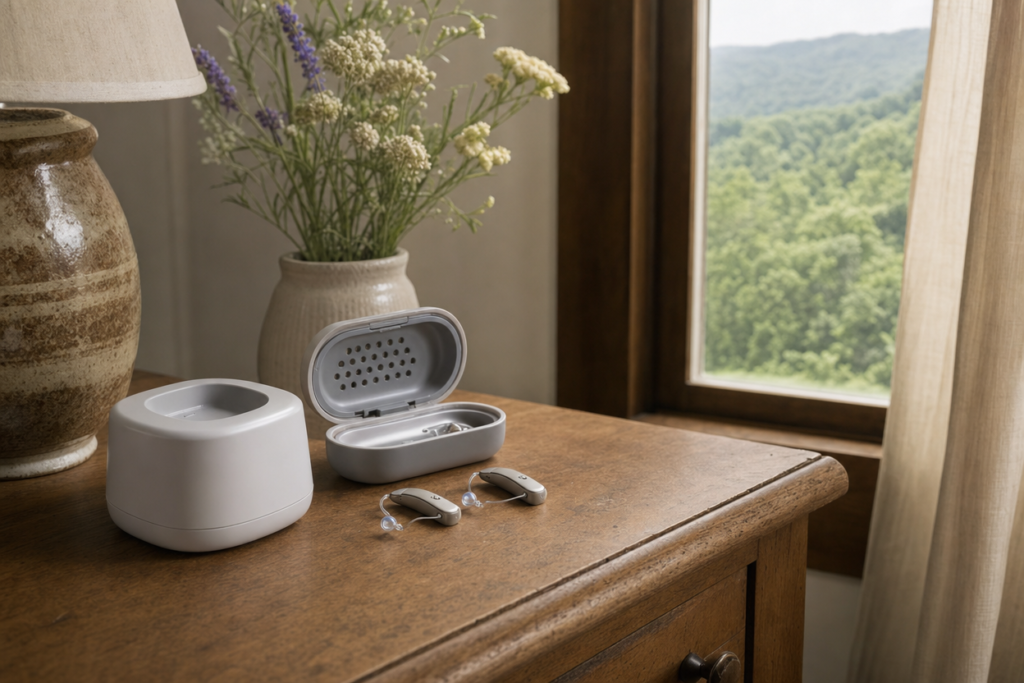
A hearing aid dehumidifier can support a moisture care routine, especially in humid Western North Carolina weather. It does not make a wet or damaged hearing aid safe to use, and the drying method must be approved for the exact device and battery system.
Sweat, rain, humidity, temperature changes, and condensation can affect microphones, receivers, charging contacts, and other small components. Water resistance varies by model and does not mean waterproof.
When a drying system may help
- Regular outdoor activity or exercise
- Work in warm or humid settings
- Frequent moisture buildup around earmolds or tubing
- Travel between air conditioning and outdoor humidity
- A manufacturer recommended overnight drying routine
Choose the drying method by device
| Question | Why it matters |
|---|---|
| Rechargeable or disposable battery? | Some drying systems and charging routines are designed differently. |
| Electronic or passive dryer? | Heat level, cycle length, and device approval can vary. |
| What does the manufacturer allow? | Instructions for moisture, cleaning, and storage are model specific. |
| Is the device already malfunctioning? | Drying should not delay professional inspection when sound is distorted or unreliable. |
What not to do
- Do not use a hair dryer, oven, microwave, or direct high heat.
- Do not place hearing aids in water, alcohol, or household cleaning liquid.
- Do not force open the device housing.
- Do not keep wearing a device that is hot, visibly damaged, or irritating the ear.
Simple fall routine
- Check devices with clean, dry hands.
- Wipe the exterior using the approved material.
- Inspect openings and charging contacts.
- Store or dry the devices using the manufacturer approved method.
- Note weak, intermittent, distorted, or unbalanced sound.
- Arrange service if the problem returns.
Frequently asked questions
Is rice safe for wet hearing aids?
Use an approved drying method instead of a home remedy. Rice does not diagnose damage and can introduce dust.
Can I charge hearing aids inside a dryer?
Only if the product is designed and approved for that exact setup.
Does water resistance prevent moisture damage?
No. Ratings describe specific test conditions. Daily wear, aging seals, and charging contacts still require care.
Add this to the weekly hearing aid maintenance routine.
Bring the question to real life
If moisture problems keep returning, bring the devices, charger, and drying equipment. The team can inspect the pattern and recommend a model specific routine.
Contact The Hearing Guy to schedule a conversation in Asheville or Hendersonville.