
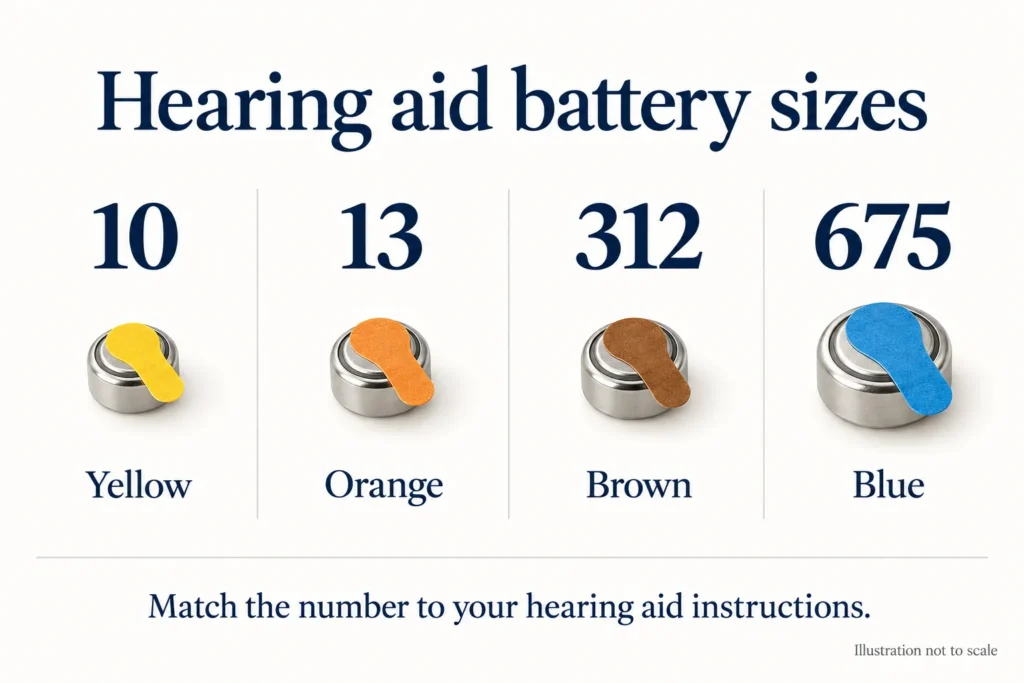
The common disposable hearing aid battery sizes are 10, 13, 312, and 675. Their package colors are yellow, orange, brown, and blue respectively. Match the size specified for your hearing aid, then use the color as a second check. A larger battery is not an upgrade for a device built for a smaller one.
This reference is for identifying replacement batteries. It is separate from rechargeable hearing aid care: a device with an integrated rechargeable battery should use its approved charging system, not a disposable cell selected from this chart.
Hearing aid battery size chart
| Battery size | Standard package color | Before buying |
|---|---|---|
| 10 | Yellow | Confirm size 10 in your device instructions |
| 13 | Orange | Do not confuse the number with 312 |
| 312 | Brown | Match the full three-digit size |
| 675 | Blue | Check the exact product required for your device |
Rayovac lists these standard size and color combinations. Color helps you find the package, but the number and your device instructions settle the choice. If packaging looks unfamiliar, do not guess from the battery’s appearance.
Find the right size once, then keep a record
Check the hearing aid manual, a previously confirmed package, or your hearing care team. Write down the brand and model of the device alongside its battery size. If you have a backup pair, identify its requirements separately.
A phone photo of the correct package is useful when shopping. If someone else buys supplies for you, send the photo and the written number. “The brown hearing aid batteries, size 312” is clearer than “the little round ones.”
Keep different sizes in their original packaging. A mixed container of loose batteries makes identification harder and creates a safety risk. Store batteries away from medicines so that small cells cannot be confused with pills.
What if the battery does not fit?
Stop if the compartment will not close normally. Check the size and the orientation shown in the device instructions. Do not force the door, trim a part, or try a similar-looking battery from another product.
If the correct battery still does not fit properly, have the device checked. A compartment problem is different from a shopping mistake, and extra force can turn a small issue into a repair.
Never try to put a disposable hearing aid battery into a charger. If you are unsure whether a removable battery is rechargeable, confirm its exact type with the manufacturer or your hearing care professional before using any charging equipment.
The sticker has a purpose
Zinc-air hearing aid batteries use air to activate. Rayovac advises leaving the tab on until use and allowing activation time after removal. Follow the instructions on your particular battery package. Reattaching the sticker does not restore a used battery to new condition.
When buying a pack, check that it is intact and within its stated date. Buy an amount that fits your use rather than choosing the biggest package automatically. If your needs change or you move to rechargeable hearing aids, avoid continuing to order supplies for the old device by habit.
Do not judge batteries from runtime alone
A hearing aid’s power use depends on the device and how it is used. Rayovac notes that factors including amplification and hours of wear affect battery life. An exact number of days should not be promised across all devices.
If runtime changes unexpectedly, record the date, which device, battery package, and what changed in your daily use. Bring that information to a service visit. Repeatedly trying new brands without a record can make it harder to identify the issue.
The useful question is not simply “Which battery lasts longest?” It is “Am I using the specified battery, and is this hearing aid behaving as expected?” Our hearing aid care guide covers the broader maintenance discussion.
Keep new and used batteries secure
Keep all small batteries away from children and pets, including used batteries awaiting disposal. Do not leave them on a bedside table, in a pill organizer, or loose in a pocket. Follow local battery disposal guidance and the manufacturer’s instructions.
If someone may have swallowed a battery or placed one in an ear or nose, seek immediate help rather than waiting for symptoms. In the United States, call Poison Control at 1-800-222-1222. The National Capital Poison Center provides urgent battery exposure guidance. For a pet exposure, contact a veterinarian promptly.
Our device service and troubleshooting support is for prescription hearing aids. The Hearing Guy does not service OTC hearing devices. For OTC device support, contact the manufacturer or seller.
Bring the device if the label is unclear
The Hearing Guy’s independent hearing care team, including Dr. Brent Steele, MD, BC-HIS, serves Asheville and Hendersonville. Visit our hearing aid battery information page or contact the office with your model and supply questions.
You do not need to identify an unfamiliar part by yourself. A confirmed size, a labeled package, and a simple storage routine make the next replacement much easier.
Sources checked October 2026: Rayovac size chart and battery FAQ; National Capital Poison Center battery guidance.