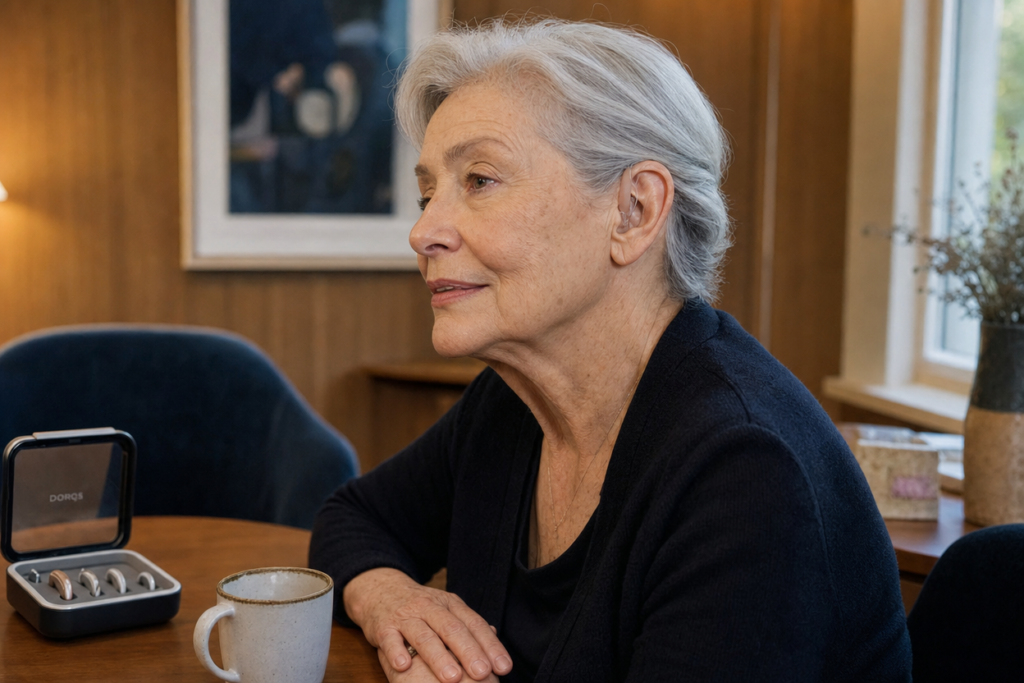
A woman in her seventies came in last spring and sat down in the chair across from me. She’d been to three other places before she landed here. She put her hands in her lap and said, “I just want someone to tell me the truth about what I need.”
That sentence is the whole reason I’m writing this.
Hearing care in this country has changed in ways most patients never see from their side of the desk. Ten years ago, the practice down the road was almost always owned by the person fitting your hearing aids. That’s not the default anymore. Over the last decade, large national groups and hearing aid manufacturers have quietly purchased a big share of the clinics in town after town. The sign on the door usually doesn’t change. The person who answers the phone may not change either. But behind the scenes, a lot does.
This isn’t a complaint about corporate hearing clinics — there are good people working in every kind of practice. It’s a piece about what actually changes when ownership changes, and why those differences end up sitting in the room with you when you’re trying to decide what to do about your hearing. If you’re sorting through your options right now, this is part of choosing the right hearing clinic for you.
What “independent” actually means here
When folks hear “independent,” they usually picture a small-town family business. That’s part of it. But for a hearing clinic, the word means something more specific.
An independent hearing clinic is owned by the person who treats you — not by a national group, a private equity portfolio, or a hearing aid manufacturer. The owner makes the calls about which devices to carry, how long an appointment lasts, what gets billed for and what doesn’t, and how follow-up care works. There’s no regional VP setting quotas. There’s no corporate parent telling us we have to prioritize a brand we’re contractually tied to.
At The Hearing Guy, I’m the owner. My wife Leslie helps run the business. We’ve been doing hearing care in Asheville since 2014 and we became independent in 2017. We’ve never sold the practice, and we don’t plan to. When you walk in, you meet the same people every visit. That continuity sounds like a small thing until you’ve been through the alternative.
What changes when a clinic is corporate-owned
This is the part that doesn’t get talked about much. Most corporate-owned hearing clinics still have skilled providers behind the desk. The change shows up in the structure around that provider.
A few patterns I’ve watched develop over the last decade:
Brand limitations. When a manufacturer owns the clinic, the clinic tends to fit that manufacturer’s hearing aids — sometimes exclusively, sometimes overwhelmingly. The provider may genuinely believe that brand is the right fit, but the financial structure makes it very hard to recommend anything else. The patient never sees this. They just see one brand on the table.
Appointment time pressure. Corporate practices usually have throughput targets — appointments per day, fittings per week. A 90-minute first visit is hard to justify on a corporate scorecard. So those visits get shorter. The provider isn’t lazy; they’re managed.
Staff turnover. When the practice is a job site instead of someone’s life’s work, providers come and go. The person who fit your aids in March may not be there in October. You start over with someone new.
Follow-up care unbundled. Some corporate models bill for follow-up adjustments that an owner-operator would include without thinking. Not because of malice — because the spreadsheet says so.
If any of that sounds familiar from your own experience, you’re not making it up.
What changes when the owner is in the room
Here’s the simplest way I can put it: when I recommend a hearing aid to you, I’m not getting a bonus for picking one brand over another. I work with every major manufacturer — Oticon, ReSound, Starkey, Unitron, Phonak, Signia, Widex. I broke off from a single-brand franchise back when we became independent specifically so I could put the right device on the right person, period.
That changes the conversation. You ask me about a brand you read about online, and I can give you a real answer about whether it fits your hearing loss and lifestyle. If the honest answer is “that’s not the one for you,” I can say that without losing money on the visit. Several of my patients have said in their reviews that I’ve recommended options that wouldn’t make me a dime. That’s not a marketing line — that’s just how an independent practice can afford to operate.
The other thing that changes is time. A first visit at our clinic isn’t a fifteen-minute slot. We test your hearing in more than just a quiet booth — we test it in real-world environments because that’s where you actually live. We talk through your medical history, the situations where you’re struggling, the family conversations you’re missing. Then we talk about options. That whole process takes as long as it takes. There’s no one upstairs counting.
The pattern in Western North Carolina
I’ll be careful here. I’m not going to name specific competing clinics because that’s not how I want to spend my words. But I will tell you what’s true at the market level.
A meaningful share of the hearing clinics in WNC are now part of national groups or manufacturer-owned chains. Some of them still feel local because the sign hasn’t changed. The set of genuinely owner-operated, never-sold, independent hearing clinics in our area has gotten smaller over the past five years, and based on what I see in the industry, it’s likely to keep shrinking.
I’m telling you that not to scare you, but because you deserve to know what you’re looking at when you compare options. The “small local practice” you’re considering may not be what you think.
How to tell which kind of clinic you’re looking at
A few questions you can ask on the phone or in the lobby:
Who owns this clinic? If the answer involves a parent company, a holding group, or a manufacturer, that’s worth knowing. There’s nothing wrong with the answer — but you should hear it.
How many hearing aid manufacturers do you fit? An honest answer is a real number. If it’s one or two, ask why.
How long has the current provider been here, and how long has the owner been at this address? Continuity matters when you’re going to be coming back for adjustments for years.
Is the person fitting me today the same person I’ll see at my follow-up? At an independent practice, the answer is almost always yes.
Come see for yourself
If you’ve been trying to sort out where to go, I’d be glad to talk through your situation in person. There’s no obligation in either direction — just a real conversation about your hearing.
Come Experience Hearing for yourself at our Asheville or Hendersonville office. You can reach us at (828) 274-6913. I’ll be the one across the table.
— Dr. Brent Steele, MD, BC-HIS
The Hearing Guy